High-Speed, High-Accuracy Surface Defect Detection for Industrial Production Lines
Sheet metal manufacturing demands continuous, high-speed, and highly reliable quality inspection. Defects such as scratches, dents, pits, oil stains, roll marks, coating inconsistencies, and edge defects can occur at any point during rolling, cutting, coating, or handling. Manual inspection or traditional area-scan vision systems often fail to keep up with line speeds and large sheet widths.
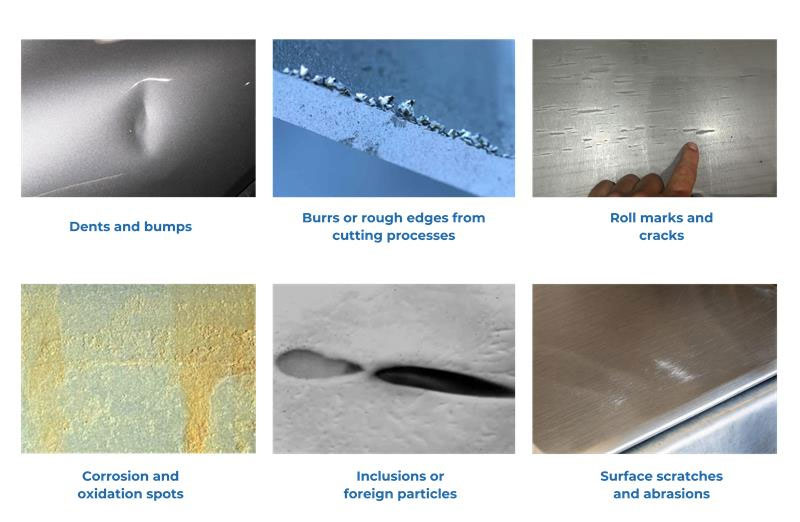
A line-scan based machine vision system is the industry-preferred solution for real-time, 100% inspection of moving sheet metal. This article explains—step by step—how a line-scan inspection system works, why it is ideal for sheet metal applications, and how it is deployed in real production environments.
Why Line-Scan Technology Is Ideal for Sheet Metal
Unlike area-scan cameras that capture a full 2D image in a single frame, line-scan cameras capture one line of pixels at a time. As the sheet moves continuously on a conveyor or roller table, these lines are stitched together to form a high-resolution, distortion-free image of the entire sheet.
This makes line-scan systems ideal for steel, aluminum, copper, stainless steel, galvanized sheets, coils, and coated metal strips.
Core Components of a Line-Scan Sheet Metal Inspection System
A robust sheet metal inspection system consists of multiple tightly synchronized components:
A. Line-Scan Camera
B. Encoder / Speed Synchronization
C. Industrial Lighting
D. Industrial PC / GPU
E. Enclosure & Mechanical Stability
Image Formation: How a Line-Scan Image Is Built
A key concept in line-scan inspection is image reconstruction.
This method ensures:
- No motion blur
- No perspective distortion
- Identical pixel scaling in X and Y directions
Defects Detected in Sheet Metal Inspection
Line-scan systems are designed to detect a wide range of surface and dimensional defects:
AI + Image Processing for Defect Detection
Modern sheet metal inspection systems combine classical image processing with AI-based defect detection.
Image Processing Layer
- Background normalization
- Noise suppression
- Texture analysis
- Edge enhancement
- Contrast correction
AI Layer
- Deep learning models trained on real defect images
- Learns complex defect patterns
- Handles variations in material, finish, and lighting
- Reduces false positives significantly
Systems such as Intelgic’s Live Vision AI platform use a hybrid AI approach—leveraging both rule-based filters and neural networks for industrial reliability.
Real-Time Decision Making & Classification
After defect detection, the software performs:
Integration With Automation & Plant Systems
A line-scan inspection system does not operate in isolation.
PLC & Machine Integration
- Speed synchronization
- Reject triggers
- Cutter or shear alignment
- Marking defective zones
Data & IT Integration
- MES / ERP connectivity
- Defect maps for each coil or sheet
- Historical defect analytics
- Digital quality certificates
Communication Methods
Visualization, Reporting & Traceability
Operators and quality teams benefit from:
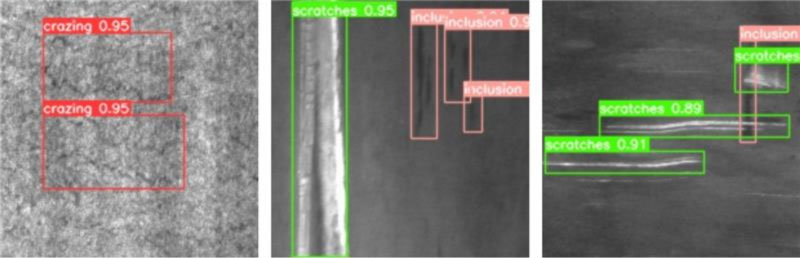
This enables root-cause analysis, process optimization, and continuous quality improvement.
Typical Industrial Applications
Line-scan sheet metal inspection is widely used in:
Key Benefits of Line-Scan Sheet Metal Inspection
-
100% surface inspection
-
Consistent quality
-
Early defect detection
-
Data-driven decisions
-
Full traceability
-
Scalable solution
A line-scan based sheet metal inspection system is the most effective solution for inspecting large, fast-moving metal surfaces with high precision. By combining synchronized imaging, industrial lighting, AI-driven defect detection, and deep automation integration, manufacturers can achieve zero-defect production goals while improving yield, consistency, and customer satisfaction.