Paver blocks are widely used in outdoor flooring—driveways, walkways, landscapes, parking lots, commercial complexes and urban infrastructure. The quality of these blocks depends heavily on uniform color shade, accurate design pattern, and consistent aesthetic finish. Any variation in color or design creates visible inconsistency and leads to customer dissatisfaction or product rejection.
Traditional manual inspection of paver blocks is slow, subjective, and inconsistent. Operators visually compare the block with a reference sample and try to detect variations—but human eyes cannot reliably detect small color deviations or subtle pattern inconsistencies across thousands of blocks produced daily.
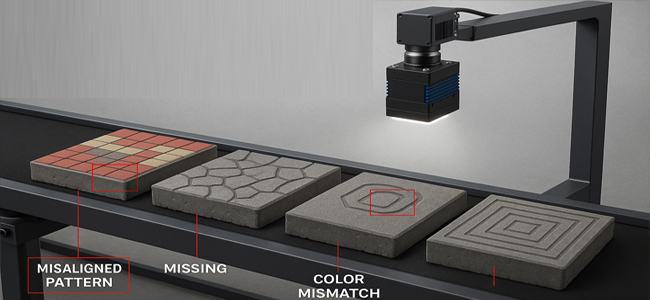
To overcome these limitations, manufacturers are now adopting AI-powered color shade inspection and automated design matching systems. These systems use industrial cameras, controlled lighting, and machine vision algorithms to inspect every paver block in real time, ensuring 100% quality consistency.
This article explores how automated color shade & design inspection works, why it is essential, and how Intelgic’s AI-driven system transforms quality control for paver block manufacturing.
Color shade differences are among the most common defects in paver blocks. These variations may occur due to: Even a slight shift in pigment leads to visible patchiness when blocks are installed side-by-side. Two categories of color shade defects: 1. Global Shade Variation – block is lighter/darker than the golden sample. 2. Localized Shade Variation – Specific regions show uneven coloration, patches, or streaks. These defects can only be reliably detected with quantitative color measurement—not subjective visual judgments. Many modern paver blocks have printed or embossed designs, such as: Mosaic patterns Stone textures Geometric designs Logo or branding imprints Defects may include:
Design inspection requires not only color analysis but also shape, symmetry, and pattern recognition—tasks well suited for machine vision and AI.
Intelgic’s paver block inspection system uses industrial cameras, high-CRI lighting, and AI algorithms to create an intelligent inspection pipeline. The system uses: This ensures that color is captured consistently across all blocks. A “golden sample” paver block is imaged once.
The software automatically: This becomes the benchmark for future inspections. When a new block enters the inspection area: Intelgic’s AI recognizes: The system checks if the design is: Any mismatch is highlighted. Based on configured tolerance: This is the most accurate color representation for measuring color differences. Calculates the numerical difference between two colors. No visible difference Slight but acceptable difference Visible difference Major defect
Intelgic's system uses ΔE2000 for region-wise analysis.
AI models analyze texture and design patterns. The system can:
The system reads patterns just like a human—but with far more consistency and accuracy.
Intelgic offers both inline and offline systems.
Whether it is a simple monochromatic block or a complex designer pattern, Intelgic's system adapts to every type.
Paver block color shade and design inspection is crucial for maintaining consistent product quality, reducing returns, and safeguarding brand reputation. Manual inspection methods are no longer sufficient for high-volume manufacturing. With advanced imaging, color science, and AI algorithms, manufacturers can now achieve flawless consistency and deliver visually perfect paver blocks every time.Understanding Color Shade Variation in Paver Blocks
Design Pattern Defects in Paver Blocks
Why Manual Inspection Fails for Paver Blocks
Manual color and design inspection is challenging because:
As a result, defective blocks often mix with good ones, leading to:
Automated Color Shade & Design Inspection – How It Works
Image Capture Under Controlled Lighting
Golden Template Creation
Paver Block Inspection
Design Pattern Matching
Pass/Fail Decision
Color Science Used in Automated Inspection
CIELAB Color Space
ΔE2000 (Color Difference Index)
Design Inspection Using AI
Real-Time Inspection on Production Line
Inline System
Offline / Stationary System
Key Features of Intelgic's Paver Block Inspection System
Benefits of Automated Color & Design Inspection
For Manufacturers
For Customers
Applications in Paver Block Industry
Interlocking pavers
Designer paver tiles
Embossed or textured blocks
Concrete color tiles
Parking and pathway blocks
Mosaic or multicolor tiles
Intelgic's AI-powered inspection system provides: