Inspection automation is often misunderstood as a camera + software problem. In reality, over 60–70% of inspection failures originate from poor mechanical and electrical design, not from AI or vision algorithms.
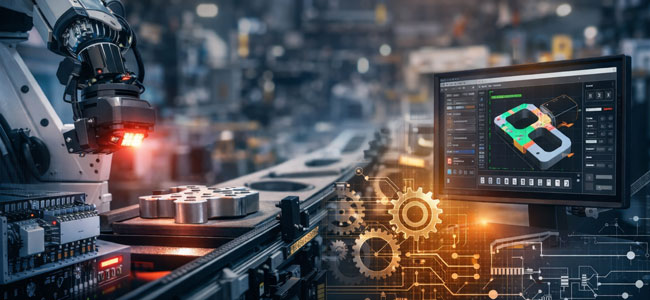
Every manufacturing environment is unique, and inspection accuracy is governed by the product, the process, and the way images are captured, not by algorithms alone.
Every product differs in:
- Geometry
- Material behavior
- Surface finish
- Orientation and motion
- Environmental conditions
- And most importantly—the manufacturing and inspection process itself
Because of these variables, custom mechanical and electrical system design becomes mandatory for building reliable, scalable, and accurate inspection automation solutions.
Every Product Demands a Unique Inspection Approach
No two products behave the same under inspection.
Differences in:
- Size and shape complexity
- Reflectivity and translucency
- Texture and coating
- Deformation during handling
Why Standard Systems Fail
Generic inspection systems assume:
- Fixed part orientation
- Uniform surfaces
- Predictable lighting interaction
In real factories, these assumptions rarely hold true.
Role of Custom Mechanical Design
Custom mechanical systems ensure:
- Controlled and repeatable part positioning
- Proper exposure of critical inspection areas
- Consistent orientation relative to cameras and lights
- Support for multiple product variants
Without this, inspection results become inconsistent and unreliable.
The Inspection Process Is as Important as the Product
Two manufacturers producing the same product may require completely different inspection systems because their process flows are different.
Inline (on a running conveyor)
At a stop-and-go station
Rotational or indexed
Pre-process, in-process, or post-process
Why Process-Driven Design Matters
Inspection requirements depend on:
- Cycle time constraints
- Upstream and downstream operations
- Operator interaction points
- Space limitations
- Production takt time
A system designed without considering the actual process flow will disrupt production instead of enhancing quality.
Designing the Right Imaging Process Is Critical
Accurate inspection starts with correct image formation, not AI models.
Imaging Is a Design Discipline
The system designer must define:
- Camera type (area-scan, line-scan, 3D, thermal, etc.)
- Camera placement and angle
- Field of view and resolution
- Triggering strategy
- Lighting type and direction
This combination defines what the AI sees.
Why This Must Be Custom
Different inspection goals require different imaging strategies:
Inspection Goals
- Surface defect detection
- Dimensional measurement
More Inspection Goals
- Color or shade verification
- Presence/absence checks
A poor imaging design cannot be fixed in software later.
AI accuracy is limited by image quality and consistency—both are outcomes of system design.
Lighting and Optics Depend on Product and Process Geometry
Lighting is not an accessory—it is a core part of inspection engineering.
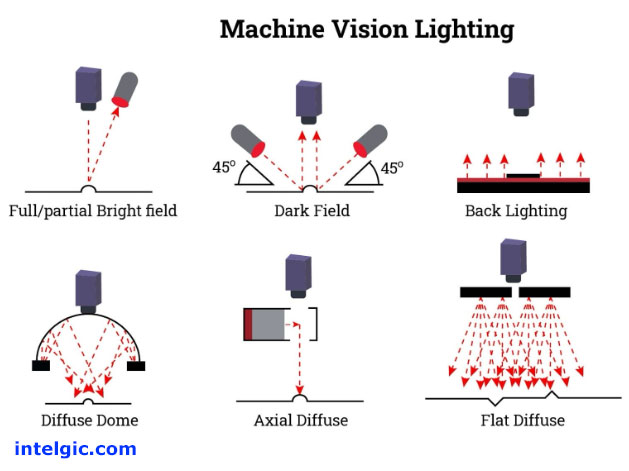
Surface finish and material behavior determine:
- Reflection patterns
- Shadow formation
- Contrast levels
Why Custom Mechanical Integration Is Needed
To achieve consistent illumination, the system often requires:
- Fixed lighting angles
- Controlled distance between part and light
- Shielding from ambient factory lighting
- Product-specific lighting housings
These requirements cannot be met using generic mounts or open setups.
Inspection Systems Must Be Embedded Into Existing Manufacturing Lines
Manufacturers rarely want standalone inspection machines that interrupt production.
What Manufacturers Prefer
- Inspection embedded into existing conveyors or stations
- Minimal changes to line layout
- No impact on throughput
- Seamless operator workflow
This demands custom mechanical adaptation, not off-the-shelf frames.
Custom Design Enables:
Inspection must feel like a natural extension of the process, not an external add-on.
Electrical Systems Must Match Process Timing and Control Logic
Inspection automation relies on precise coordination between:
Key Components
- Sensors
- Cameras
- Lights
- Motion elements
- PLCs and industrial PCs
Why Custom Electrical Architecture Is Required
Each process has unique timing and signaling requirements:
- When to trigger cameras
- When to activate lights
- When to communicate results
- How to handle pass/fail logic
Custom electrical design ensures:
- Deterministic triggering
- Clean separation of power and signal lines
- Safe interlocks and emergency controls
- Long-term system reliability
A poorly designed electrical system leads to inconsistent inspection behavior—even with good software.
7. Software Accuracy Depends on Hardware Predictability
AI models assume:
AI Model Assumptions
- Consistent viewpoints
- Stable lighting
- Repeatable image capture timing
These assumptions only hold true when mechanical and electrical systems are designed specifically for the inspection task.
Custom System Design Enables
- Repeatable image datasets
- Lower false positives
- Faster AI model convergence
- Reduced retraining effort
Hardware predictability directly impacts long-term AI performance.
8. Custom Design Enables Scalability and Future-Proofing
A well-designed inspection system should evolve with production.
Custom-Built Systems Allow
- Adding more cameras later
- Supporting new product variants
- Expanding inspection coverage
- Integrating robotics or automation upgrades
Generic systems often require complete replacement when requirements change.
Inspection Automation Is a Process-Driven Engineering Problem
Inspection automation is successful only when:
Key Requirements
- The product characteristics are understood
- The manufacturing process is respected
- The imaging process is engineered correctly
- The system is embedded seamlessly into production
Comparison
| Aspect | Generic System | Custom Designed System |
|---|---|---|
| Product adaptability | Limited | High |
| Imaging quality | Assumed | Engineered |
| Process integration | Poor | Seamless |
| Inspection accuracy | Inconsistent | Repeatable |
| Scalability | Restricted | Future-ready |
Final Takeaway
Inspection accuracy is not created by software alone—it is engineered through the right mechanical design, electrical architecture, and imaging process aligned with the manufacturing workflow.