Reading Serial Numbers & Text from Metal Parts Using OCR and AI Vision
Published on: Feb 24, 2026

Written by:Content team, Intelgic
Automated Metal Marking Inspection with Intelgic’s Machine Vision System
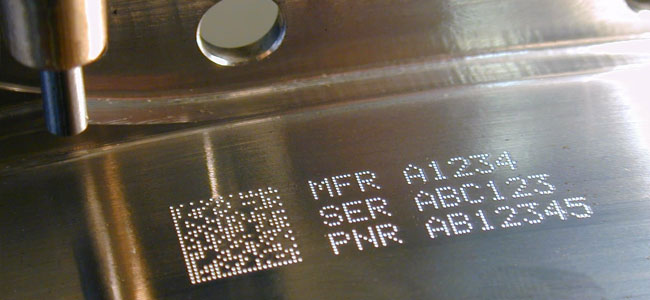
These markings are critical for traceability, compliance, warranty tracking, and quality control. However, reading text from metal surfaces is not as simple as scanning printed labels.
In modern manufacturing, metal parts are often marked with:
Metal parts present challenges such as:
Solution: Manual inspection or handheld scanners are inconsistent and slow. To address this, Intelgic’s AI-powered OCR vision system automates text reading directly from metal parts with high accuracy and reliability.
Common Metal Marking Methods
Metal parts are marked using:
Dot Peen Marking
Creates micro-indentations forming characters. Often low contrast and irregular.
Laser Engraving
Creates shallow surface contrast. May vary with material finish.
Stamping / Embossing
Raised or recessed characters.
Chemical Etching
Subtle surface texture change.
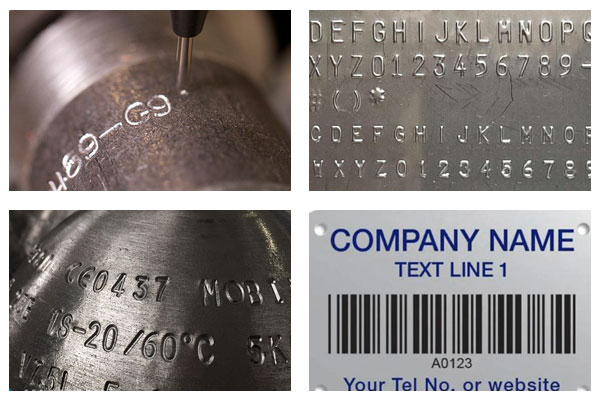
Each marking method requires customized imaging and AI strategies.
Challenges in Reading Text from Metal
Metal surfaces create multiple inspection difficulties:
Highly reflective surfaces cause glare.
Curved parts distort character appearance.
Small font sizes reduce readability.
Inconsistent marking depth affects clarity. n
Oil or dust contamination lowers contrast.
Multi-line or rotated text adds complexity.
Traditional OCR libraries often fail under these industrial conditions.
Intelgic’s Imaging Strategy for Metal OCR
Intelgic designs a custom imaging architecture based on part geometry and marking type.
Low-Angle Dark Field Lighting
Enhances indentations in dot peen markings.
Diffused Dome Lighting
Reduces reflection from polished surfaces.
Coaxial Lighting
Improves contrast for engraved marks.
Telecentric Lens
Maintains dimensional accuracy without distortion.
Rotary Motion System
Rotates cylindrical components for full 360° capture.
Multi-Camera Setup
Captures side, top, and curved surfaces simultaneously.
Lighting and optics are optimized to maximize character contrast before AI processing begins.
OCR & AI Processing Workflow
Image Acquisition
High-resolution industrial cameras capture detailed images.
Pre-Processing
Character Segmentation
AI isolates individual characters or text blocks.
AI-Based OCR Recognition
Instead of traditional rule-based OCR, Intelgic uses:
The AI model is trained with:
Advanced Capabilities
Reading Low-Contrast Dot Peen Marks
AI detects indentation texture changes even when visual contrast is minimal.
Curved Surface OCR
Geometric correction algorithms flatten curved surfaces digitally.
Damaged Character Reconstruction
AI predicts partially visible characters using contextual understanding.
Multi-Line & Rotated Text
Orientation correction ensures accurate reading.
Real-Time Verification
Integration with Manufacturing Systems
Intelgic’s OCR system integrates with:
Each inspected part’s data is stored with:
Timestamp
Image record
AI confidence score
Operator/line ID
This ensures full production traceability.
Dashboard & Reporting
Intelgic provides a real-time dashboard displaying:
Real-Time Display
Historical Analytics
Deployment Models
Intelgic offers:
Inline conveyor-based OCR system
Robotic pick-and-read inspection
Rotary precision inspection station
Standalone verification machine
Benefits of AI-Based Metal OCR
High Accuracy on Low-Contrast Marks
Reads Small Characters (Micron-Level Detail)
Works on Reflective & Curved Surfaces
Real-Time Validation & Reject Control
Full Digital Traceability
Reduced Manual Intervention
Why Intelgic?
Intelgic delivers enterprise-grade OCR solutions:
Complete turnkey solution (camera + optics + lighting + AI + PLC)
Custom mechanical design for complex parts
Advanced AI OCR training capability
Multi-surface inspection expertise
Real-time GPU-based inference
Scalable architecture for multi-line deployment
This is not just OCR — it is intelligent traceability automation for manufacturing.
Reading serial numbers and text from metal parts is a complex industrial challenge. Variations in marking depth, surface finish, lighting, and geometry make traditional OCR unreliable.
Intelgic’s AI-powered machine vision OCR system overcomes these challenges by combining:
Optimized imaging geometry
Advanced lighting techniques
Deep learning OCR algorithms
Real-time industrial integration
The result is accurate, automated, and traceable metal part identification — ensuring quality, compliance, and operational efficiency.