Steel and metal manufacturing industries operate at high production speeds and large material volumes, making quality inspection a critical challenge. Even small defects on metal surfaces can affect downstream processes such as stamping, welding, machining, coating, and assembly.
Traditional manual inspection methods are often unreliable and incapable of keeping up with modern production lines. As a result, manufacturers increasingly adopt machine vision inspection systems powered by industrial cameras and AI algorithms.
Machine vision systems enable manufacturers to automatically inspect metal surfaces, measure dimensions, detect defects, and ensure consistent product quality in real time.
Why Machine Vision is Important in Metal Manufacturing
Metal manufacturing processes such as rolling, extrusion, stamping, casting, and machining can introduce defects that affect product quality.
Machine vision systems help manufacturers:
Automated inspection systems allow manufacturers to perform continuous inspection of metal products during production.
Types of Metal Products Inspected
Machine vision systems are used to inspect a wide variety of metal products.
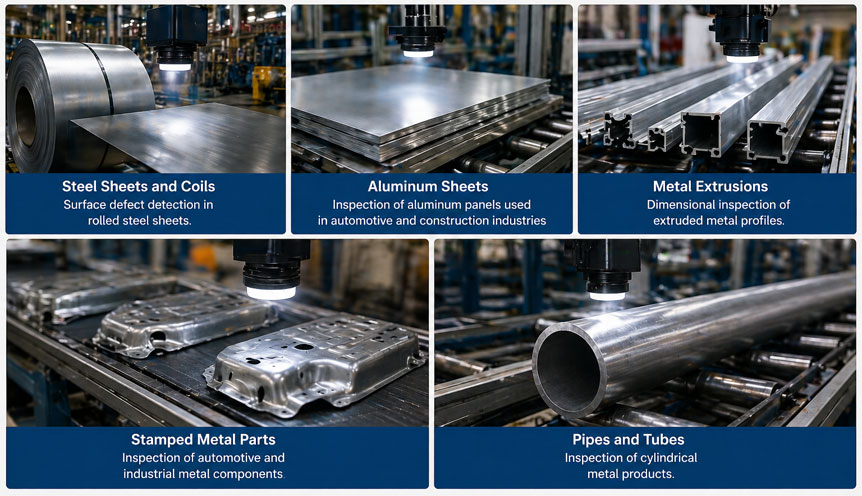
Steel Sheets and Coils
Surface defect detection in rolled steel sheets.
Aluminum Sheets
Inspection of aluminum panels used in automotive and construction industries.
Metal Extrusions
Dimensional inspection of extruded metal profiles.
Stamped Metal Parts
Inspection of automotive and industrial metal components.
Pipes and Tubes
Inspection of cylindrical metal products.
Common Defects in Metal Manufacturing
Metal manufacturing processes may produce several types of defects. Detecting these defects early helps manufacturers maintain high-quality production standards.
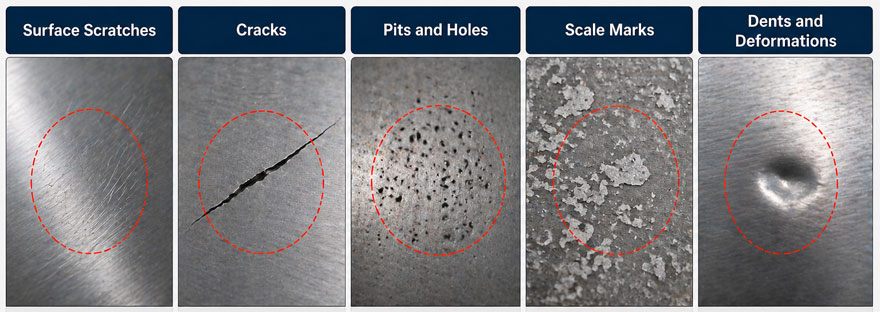
Surface Scratches
Marks caused by handling or equipment contact.
Cracks
Structural defects that weaken the material.
Pits and Holes
Small cavities on metal surfaces.
Scale Marks
Oxide scale formed during hot rolling processes.
Dents and Deformations
Mechanical damage affecting shape or surface quality.
Technologies Used in Metal Inspection Systems
Machine vision inspection systems for metal manufacturing typically combine several technologies.
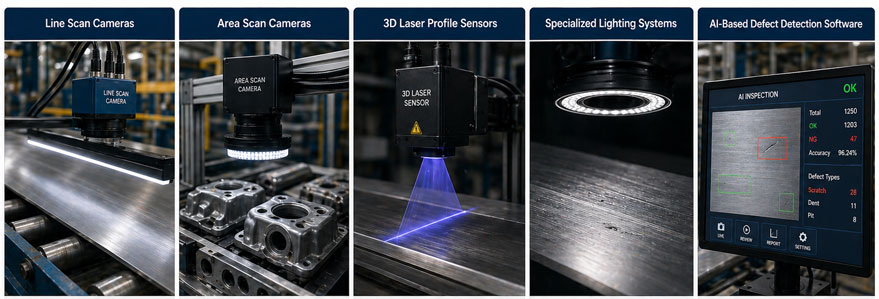
Line Scan Cameras
Ideal for inspecting continuous materials such as metal sheets and coils.
Area Scan Cameras
Used for inspecting individual metal parts.
3D Laser Profile Sensors
Used for dimensional measurement and profile inspection.
Specialized Lighting Systems
Lighting geometries such as dark field illumination highlight surface defects.
AI-Based Defect Detection Software
Deep learning models detect complex surface defects and anomalies.
Inspection Workflow
Machine vision inspection systems follow a structured inspection process.
Material Movement
Metal sheets or parts move through the inspection station.
Lighting Optimization
Specialized lighting highlights defects and surface features.
Image Acquisition
Industrial cameras capture high-resolution images.
AI-Based Image Analysis
AI algorithms analyze images to detect defects.
Defect Classification
Detected defects are categorized by type and severity.
Quality Decision
Defective materials are flagged or rejected automatically.
Benefits of Machine Vision Inspection in Metal Manufacturing
High-Speed Inspection
Inspection systems can operate at production line speeds.
100% Inspection Coverage
Entire surfaces of materials can be inspected automatically.
Improved Quality Control
Defects are detected early in the manufacturing process.
Reduced Scrap and Rework
Early detection prevents defective materials from progressing through production.
Data-Driven Manufacturing
Inspection data can be used to optimize production processes.
Applications Across Metal Manufacturing Processes
Machine vision inspection systems are used in many metal manufacturing processes.
Rolling Mills
Surface inspection of rolled steel sheets.
Metal Stamping
Inspection of stamped metal components.
Extrusion Processes
Dimensional inspection of extruded profiles.
Tube and Pipe Manufacturing
Inspection of cylindrical metal products.
Machining Operations
Inspection of machined surfaces and dimensional accuracy.
Integration with Smart Manufacturing
Modern machine vision systems integrate with industrial automation systems such as:
This integration enables real-time quality monitoring and automated production control.
Intelgic's Metal Inspection Solutions
Intelgic develops AI-powered machine vision systems designed specifically for steel and metal manufacturing environments.
Intelgic solutions include:
These systems allow manufacturers to detect surface and dimensional defects accurately while maintaining high production efficiency.
Future of Machine Vision in Metal Manufacturing
Machine vision technology continues to evolve rapidly.
ultra-high-resolution imaging systems
AI models capable of detecting extremely small defects
3D inspection technologies
integration with digital twin systems
fully automated smart factory inspection platforms
These innovations will enable next-generation automated inspection systems for metal manufacturing industries.
Machine vision inspection systems are transforming quality control in steel and metal manufacturing.
By combining industrial cameras, advanced lighting systems, AI-based defect detection, and automated inspection platforms, manufacturers can achieve fast, accurate, and reliable inspection of metal products.
As manufacturing continues to adopt Industry 4.0 technologies, machine vision systems will play a critical role in ensuring consistent quality and efficient production in metal manufacturing environments.