Flatness Testing of Mobile Phone Cases Using Laser Profile-Based 3D Camera
Published on: Feb 26, 2026

Written by:Content team, Intelgic
Mobile phone cases — whether aluminum, stainless steel, or molded polymer — require extremely high flatness precision to ensure:
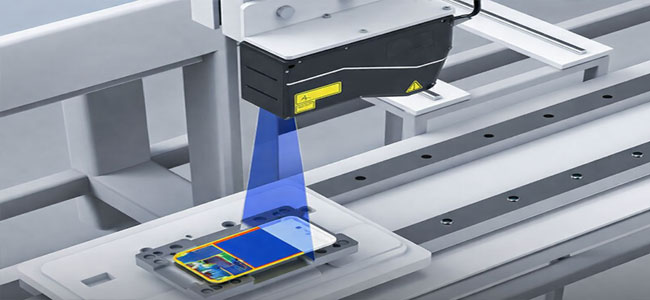
Mobile phone cases — whether aluminum, stainless steel, or molded polymer — require extremely high flatness precision to ensure:
- Proper display alignment
- Seamless screen bonding
- Waterproof sealing
- Structural rigidity
- Premium cosmetic quality
Even minor warpage or unevenness can cause:
Display lifting
Adhesive failure
Air gaps
Assembly rejection
Customer complaints
Manual flatness checking using gauges or contact probes is slow, operator-dependent, and insufficient for micron-level precision.
Intelgic Solution
Intelgic provides an advanced laser profile-based 3D inspection system that measures flatness with high accuracy and repeatability in real production environments.
Why Flatness Matters in Mobile Cases
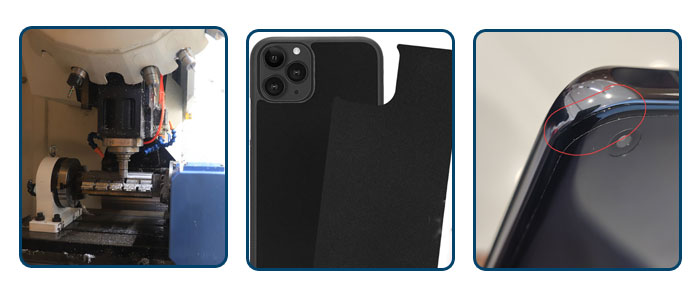
Mobile cases undergo:
CNC machining
Polishing
Anodizing
Laser cutting
Surface finishing
Thermal and mechanical stress during these processes may cause:
Warpage
Twisting
Bending
Uneven corner lifting
Surface bow
Tolerance Requirements
Flatness deviation must typically remain within tight micrometer tolerances.
Limitations of Traditional Flatness Measurement
Conventional methods include:
Key Challenges:
- Slow cycle time
- Contact-induced deformation
- Limited sampling points
- Not suitable for inline inspection
- High dependence on operator skill
For mass production of smartphone components, a non-contact and automated solution is necessary.
Laser Profile-Based 3D Measurement Principle
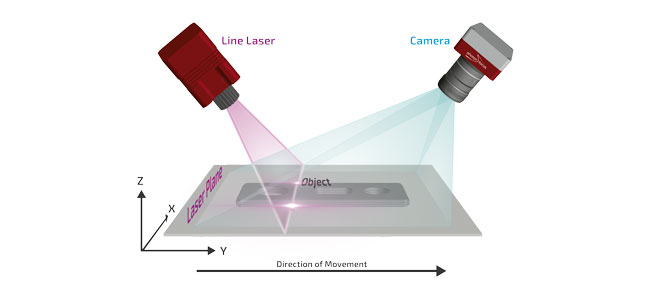
How It Works
A laser line is projected onto the surface.
A high-resolution sensor captures the reflected laser.
Based on triangulation geometry, the system calculates height variation.
As the part moves (or the camera scans), a full 3D height map is created.
System Outputs
-
Surface Contour Profile
-
Absolute Height Distribution
-
Flatness Deviation Map
-
Bow and Warp Measurement
Inspection System Architecture
Intelgic's flatness testing solution includes:
High-precision laser profile sensor
Controlled motion system (linear or rotary stage)
Stable fixture for mobile case
Industrial edge processing unit
Intelgic's 3D analysis software
PLC & MES integration
Deployment Options
Standalone Inspection
Detached quality control station
Inline CNC Output
Integrated inspection after CNC machining
Robotic Integration
Pick-and-inspect with robotic arm
Batch Inspection
Tray loading for multiple cases
Flatness Measurement Methodology
Step-by-Step Process
Reference Plane Generation
AI software fits an ideal reference plane using least-square method.
Height Deviation Calculation
Each surface point is compared against the reference plane.
Flatness Value Computation
Flatness = Maximum peak deviation – Maximum valley deviation.
Warpage & Bow Analysis
The system detects corner lifting, central bowing, twist distortion, and edge deformation patterns.
A color-coded 3D deviation map visually displays high and low areas.
AI-Based Analysis & Intelligence
Intelgic integrates advanced AI into flatness inspection, turning raw geometry scans into actionable insights.
Core AI Functions
- Automated classification of acceptable vs. defective cases
- Identification of recurring distortion signatures
- Detection of tooling-induced deformation trends
- Correlation of flatness variation with machining parameters
Training & Feedback
- Baseline datasets from good-case geometries
- Annotated warp and defect samples
- Material batch variation records
- Post-anodizing deformation profiles
Measurement Capabilities
Typical measurable parameters:
- Overall flatness deviation
- Edge warp
- Corner height variation
- Twist angle
- Hole position relative to plane
- Surface height uniformity
Accuracy depends on sensor configuration but typically reaches micron-level precision.
Real-Time Decision & Automation
The system can:
- Automatically classify Pass/Fail
- Trigger reject mechanism
- Stop line when deviation threshold exceeded
- Send real-time data to PLC
- Log inspection results in database
Every inspected case includes:
- 3D height map archive
- Numerical flatness value
- Timestamp and serial number
- AI confidence score
Dashboard & Reporting
Intelgic's dashboard provides:
- Real-time flatness graph
- Trend monitoring per batch
- Tool wear correlation
- 3D deviation heatmap visualization
- Exportable quality reports
Manufacturers benefit from:
- Early detection of process drift
- Reduced scrap
- Improved assembly yield
- Data-driven process optimization
Advantages of Laser Profile Flatness Testing
Non-Contact Measurement
Eliminates surface damage and measurement errors from physical probes
Micron-Level Precision
Achieves accuracy required for modern electronics manufacturing
Full-Surface Coverage
100% inspection, not just sampling points
High-Speed Inline Capability
Integration with production lines for real-time quality control
Operator Independence
Consistent results regardless of operator skill level
3D Visual Representation
Intuitive color-coded maps for rapid defect identification
Mass Production Scalability
Easily scales with increasing production volumes
Why Intelgic?
Intelgic delivers comprehensive flatness inspection solutions:
Laser 3D Hardware
Mechanical Design
Fixturing & motion systems
AI Analysis Software
3D inspection intelligence
System Integration
PLC & MES connectivity
Intelligent Quality Assurance
This is not just measurement — it is intelligent 3D quality assurance for precision electronics manufacturing.
Conclusion
Flatness precision is critical in mobile phone case manufacturing. Traditional measurement tools cannot provide the speed, accuracy, and automation required for modern production volumes.
Intelgic Solutions Enable:
- Accurate flatness testing with micron-level precision
- Real-time automated validation in production environments
- AI-based defect classification for consistent quality
- Complete digital traceability for quality compliance
Technology Fusion
By combining laser triangulation, motion control, and AI analytics, Intelgic empowers manufacturers to:
Achieve Superior Quality Standards
Exceed industry requirements for precision
Reduce Assembly Defects
Minimize costly rework and returns
Improve Production Efficiency
Faster inspections with 100% coverage