Automated Ceramic Tile Inspection Using AI and Industrial Camera Systems
Published on: Mar 17, 2026

Written by:Content team, Intelgic
Ceramic tiles are widely used in construction, flooring, wall cladding, and decorative applications. In modern tile manufacturing plants, thousands of tiles are produced every hour, making consistent quality inspection a major challenge.
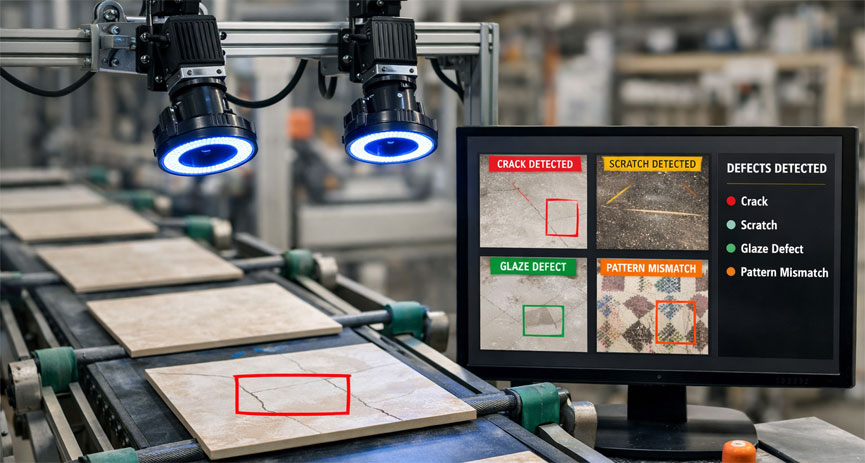
Defects such as cracks, scratches, glaze issues, and design inconsistencies can significantly reduce product quality and lead to customer complaints. Traditionally, these defects are detected through manual inspection, which is often slow, inconsistent, and prone to human error.
Intelgic provides an automated ceramic tile inspection solution using industrial cameras and AI-powered defect detection, enabling manufacturers to inspect tiles accurately and consistently in real time during production.
Challenges in Ceramic Tile Inspection
Ceramic tiles present several inspection challenges due to their material properties and decorative designs.
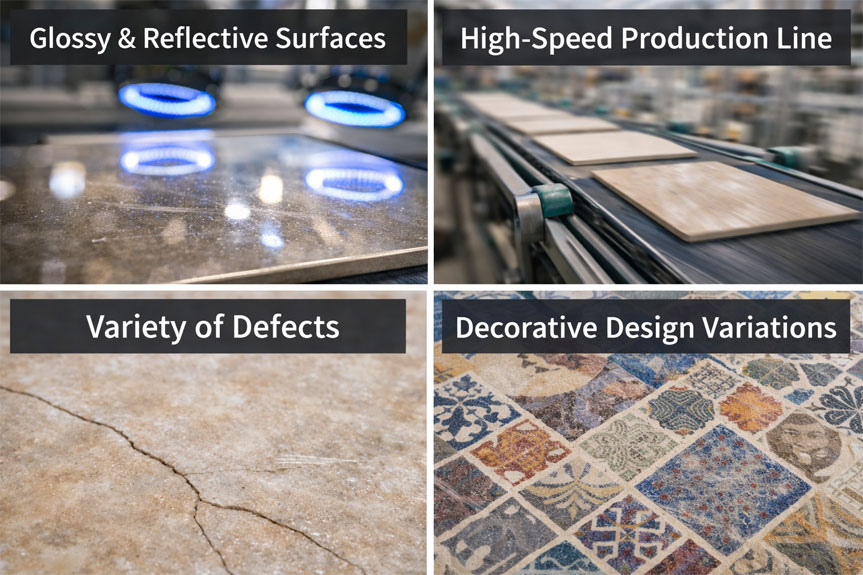
1. Decorative Design Variations
Modern ceramic tiles often include complex patterns, textures, and colors, which make it difficult for traditional rule-based inspection systems to distinguish between normal patterns and defects.
2. Glossy and Reflective Surfaces
Glazed ceramic tiles often have highly reflective surfaces, making imaging difficult due to glare and reflections.
3. High-Speed Production Lines
Tiles move rapidly on conveyor belts, requiring inspection systems capable of real-time high-speed imaging and processing.
4. Variety of Defects
Common tile defects include:
- Surface cracks
- Micro scratches
- Glaze pinholes
- Color inconsistencies
- Design misalignment
- Surface contamination
- Edge chipping
These defects must be detected accurately without confusing them with design elements.
Intelgic's Ceramic Tile Inspection Solution
Intelgic provides a fully automated inspection system designed specifically for ceramic tile manufacturing lines.
The solution combines:
- High-resolution industrial cameras
- Optimized lighting systems
- Real-time image processing
- AI-based defect detection
This integrated system ensures accurate inspection of every tile moving through the production line.
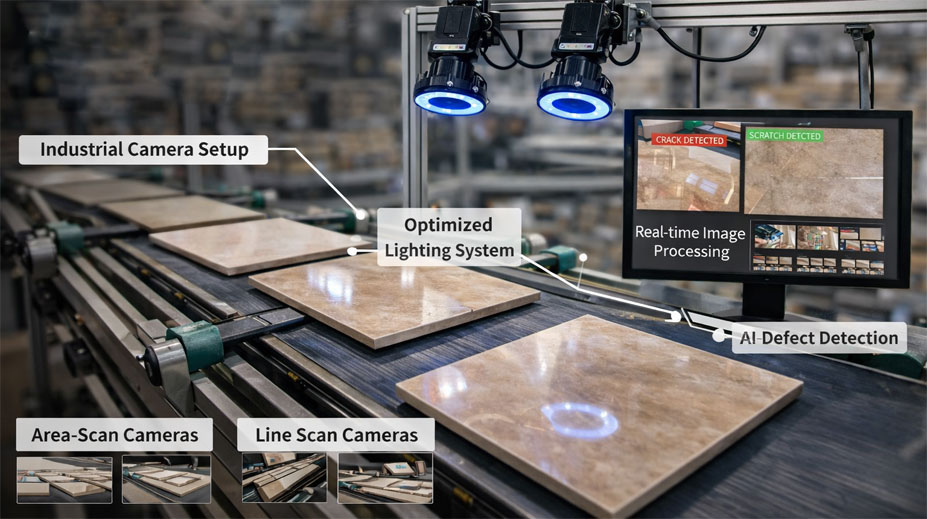
Imaging System for Tile Inspection
The inspection station is installed above the production conveyor.
Industrial Camera Setup
High-resolution industrial cameras capture detailed images of each tile as it passes through the inspection zone.
Depending on tile size and line speed, the system may use:
- Multiple area-scan cameras
- Line scan cameras for continuous scanning
- High-frame-rate imaging systems
This ensures that every section of the tile surface is captured clearly.
Optimized Lighting Geometry
Lighting plays a critical role in identifying surface defects. Intelgic designs specialized lighting setups including:
Diffused lighting
For uniform illumination
Low-angle lighting
To highlight scratches and cracks
Multi-directional lighting
To reveal surface irregularities
These lighting techniques ensure maximum defect visibility even on glossy tiles.
AI-Based Defect Detection
Intelgic's advanced AI architecture is trained using thousands of tile images representing both good and defective samples.
The AI models can detect a wide range of defects including:
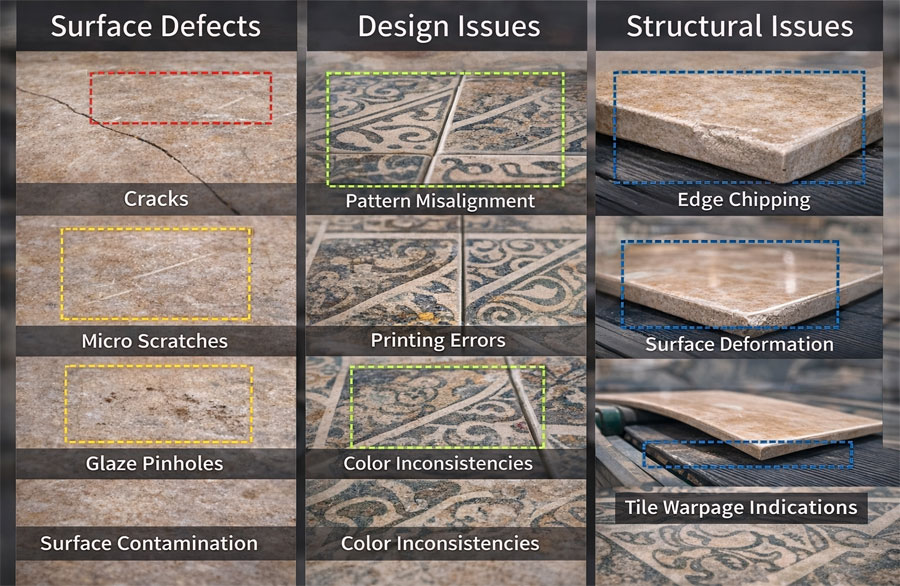
Unlike traditional rule-based systems, Intelgic's AI can distinguish decorative patterns from real defects, significantly reducing false alarms.
Surface Defects
- Cracks
- Micro scratches
- Glaze pinholes
- Surface contamination
Design Issues
- Pattern misalignment
- Printing errors
- Color inconsistencies
Structural Issues
- Edge chipping
- Surface deformation
- Tile warpage indications
Inspection Workflow
The automated inspection process operates continuously within the production line.
Tile Movement
Tiles move along the conveyor from the production process.
Image Capture
Industrial cameras capture high-resolution images of each tile.
Image Processing
Captured images are processed by Intelgic's software running on a high-performance GPU system.
AI Defect Detection
The AI model analyzes each image to detect cracks, scratches, and design defects.
Pass/Fail Decision
Each tile is classified as acceptable or defective based on defined quality criteria.
Defect Documentation
The system stores images of defective tiles along with defect type and location.
Benefits of Intelgic's Tile Inspection System
100% Inspection
Every tile produced on the line is inspected automatically.
Accurate Defect Detection
AI detects both structural defects and design inconsistencies.
High-Speed Operation
The system works seamlessly with high-speed production lines.
Consistent Quality Control
Automated inspection eliminates operator subjectivity.
Digital Quality Analytics
Manufacturers can access detailed inspection reports and defect statistics.
Applications
Intelgic's ceramic tile inspection solution can be used for:
Enabling Smart Manufacturing in Tile Industry
As tile manufacturers move toward automation and Industry 4.0, AI-powered inspection systems are becoming essential for maintaining consistent product quality.
Intelgic's ceramic tile inspection solution helps manufacturers detect defects early, reduce product waste, and maintain high-quality standards while increasing production efficiency.
By combining advanced machine vision imaging and powerful AI algorithms, Intelgic enables reliable inspection of ceramic tiles even in high-speed manufacturing environments.