AI-Based Surface Inspection for Metal Sheets
Published on: Apr 27, 2026

Written by:Content team, Intelgic
Metal sheets are widely used in industries such as automotive manufacturing, construction, appliances, electronics, and metal fabrication. The surface quality of metal sheets is extremely important because defects can affect product appearance, structural integrity, and downstream manufacturing processes such as stamping, welding, coating, or painting.
Surface defects such as scratches, dents, cracks, scale marks, and contamination can occur during rolling, handling, or transportation of metal sheets. Detecting these defects early is critical to maintaining product quality and preventing defective materials from entering the production process.
Traditional manual inspection methods are often inconsistent, slow, and unable to keep up with high-speed production lines. To address this challenge, manufacturers increasingly use AI-based surface inspection systems combined with machine vision cameras. These automated systems allow manufacturers to detect even microscopic defects on metal sheet surfaces in real time.
Challenges in Metal Sheet Surface Inspection
Metal sheet inspection presents several challenges in industrial environments.
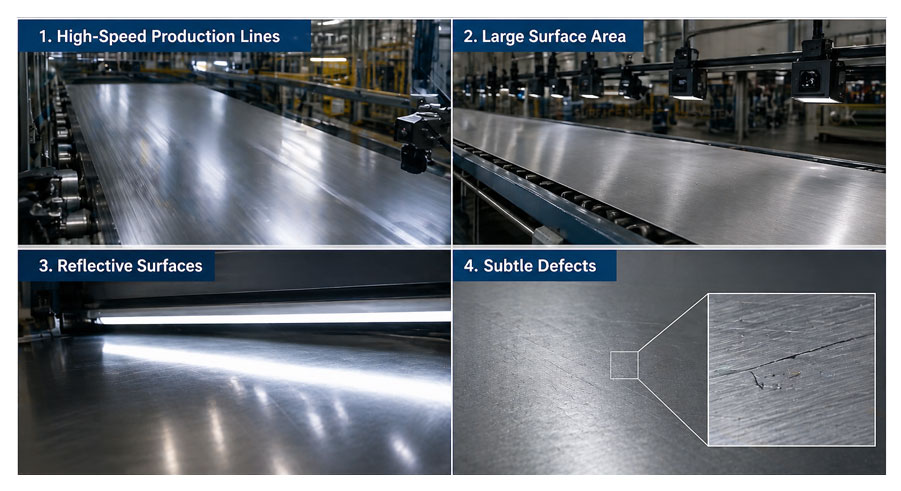
High-Speed Production Lines
Metal sheets often move through production lines at very high speeds.
Large Surface Area
Sheets can be several meters long and wide, requiring continuous inspection.
Reflective Surfaces
Shiny metal surfaces can create reflections that hide defects.
Subtle Defects
Defects such as micro-scratches or surface pits may be very small and difficult to detect.
To overcome these challenges, manufacturers use line scan camera systems combined with AI-based defect detection algorithms.
Machine Vision Systems for Metal Sheet Inspection
Machine vision systems designed for metal sheet inspection typically include:
High-Resolution Line Scan Cameras
Specialized Lighting Systems
Industrial Computing Hardware
AI-Based Inspection Software
Line scan cameras are particularly suitable for metal sheet inspection because they can capture continuous high-resolution images of moving materials.
As the sheet moves under the camera, the system captures image lines and combines them to create a complete image of the sheet surface.
Common Surface Defects in Metal Sheets
AI-based inspection systems can detect a wide range of defects.
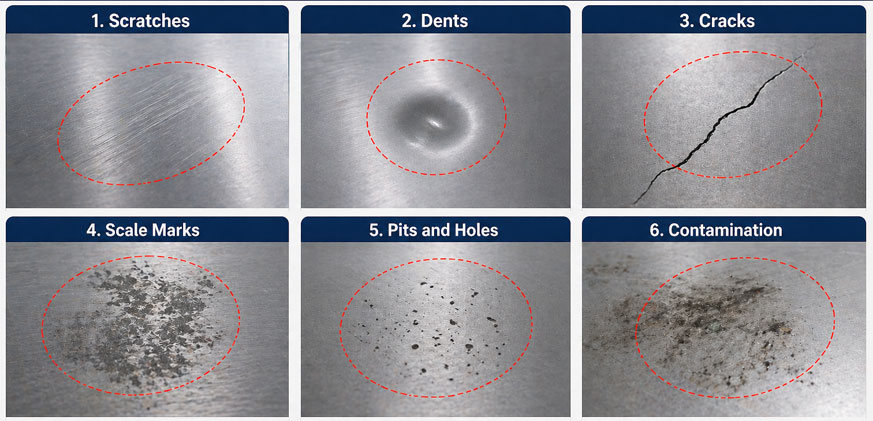
Scratches
Thin marks caused by contact with machinery or handling during production.
Dents
Depressions caused by mechanical impact during rolling or transportation.
Cracks
Structural fractures that weaken the material and affect integrity.
Scale Marks
Oxide scale formed during hot rolling processes on the sheet surface.
Pits and Holes
Small cavities on the surface that compromise material quality.
Contamination
Oil, dirt, or foreign particles on the surface affecting downstream processes.
Role of AI in Metal Surface Inspection
Traditional rule-based inspection systems rely on predefined thresholds and algorithms, which may struggle to detect irregular or complex defect patterns. AI-based systems use deep learning models trained on large datasets of metal surface images.
This significantly improves inspection accuracy and reliability.
Inspection Workflow
AI-based metal sheet inspection systems typically follow this structured workflow.
Material Movement
Metal sheets move through the inspection station on rollers or conveyors at production speed.
Lighting Setup
Specialized lighting highlights surface defects while minimizing reflections on shiny metal.
Image Capture
Line scan cameras capture continuous high-resolution images of the entire sheet surface.
AI Defect Detection
AI algorithms analyze the images in real-time to identify and locate surface defects.
Defect Classification
Detected defects are categorized based on type and severity for quality decisions.
Quality Decision
Defective sheets are automatically flagged or rejected, preventing downstream issues.
Benefits of AI-Based Metal Sheet Inspection
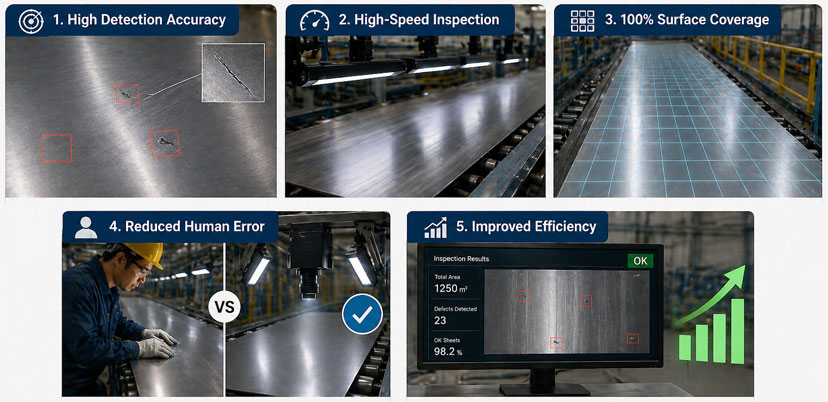
High Detection Accuracy
AI systems detect even microscopic surface defects with exceptional precision.
High-Speed Inspection
Inspection occurs at full production line speeds without slowing down operations.
100% Surface Coverage
Entire sheet surfaces are inspected automatically with no blind spots.
Reduced Human Error
Automated inspection eliminates inconsistencies from manual inspection methods.
Improved Efficiency
Early defect detection prevents costly downstream manufacturing issues.
Industrial Applications
AI-based metal sheet inspection systems are used across many industries.
Steel Manufacturing
Rolled steel sheets and coils
Automotive Industry
Body panels and stamped parts
Aluminum Production
Aluminum sheets and foils
Appliances
Metal panels for appliances
Construction
Metal sheets for building materials
Intelgic's Metal Surface Inspection Solutions
Intelgic develops AI-powered machine vision systems designed for high-speed surface inspection of metal sheets and other industrial materials.
Future Trends in Metal Surface Inspection
Advances in AI and imaging technologies are enabling more advanced inspection systems. Future developments include:
Ultra-high-resolution imaging systems
AI models capable of detecting extremely small defects
3D surface inspection technologies
Integration with smart factory systems
These technologies will enable fully automated metal surface inspection in next-generation manufacturing facilities.
AI-based surface inspection systems provide an effective solution for detecting defects on metal sheets in modern manufacturing. By combining line scan cameras, specialized lighting systems, AI-based analysis, and automated inspection software, manufacturers can ensure consistent product quality while improving production efficiency.
As industrial automation continues to evolve, AI-powered machine vision systems will play a critical role in metal surface inspection and quality control.