Is Every Inspection Checkpoint Really Being Inspected?
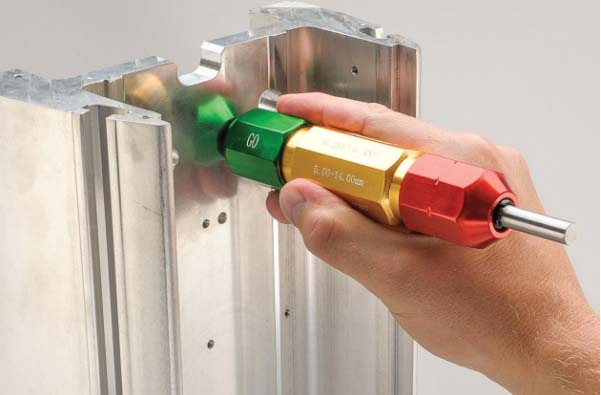
In manufacturing, a part may require many inspection checkpoints before it can be approved for the next production stage.
Quality inspectors use gauges, calipers, micrometers, and other measurement instruments to inspect holes, threads, dimensions, surfaces, and critical features. They rotate parts, change their positions, and perform multiple inspection operations according to predefined standard operating procedures (SOPs).
But manufacturers face an important challenge:
How do you ensure that every operator inspects every checkpoint, uses the correct gauge, rotates the part properly, and follows the required inspection procedure?
Even experienced inspectors can unintentionally skip checkpoints or make handling mistakes, particularly during repetitive inspection tasks.
Intelgic addresses this challenge with an AI-powered camera-based manual inspection monitoring system that observes inspection activities, tracks part movements, verifies gauge interactions, and helps ensure that every required inspection step is completed.
Instead of simply recording the inspection result, the system creates digital evidence of how the inspection was performed.
Why Traditional Manual Inspection Needs Intelligent Monitoring
Traditional manual inspection depends heavily on operator experience, training, and checklists. While these methods are essential, they provide limited visibility into the actual inspection process. Common manufacturing challenges include:
Operators unintentionally skip holes, threads, surfaces, or dimensional checks.
The wrong gauge is selected or applied at the wrong checkpoint.
Required surfaces remain uninspected because the part was not rotated correctly.
Parts are placed, moved, or stacked incorrectly during inspection.
Mandatory steps are missed or performed out of order.
A completed checklist does not prove that every inspection activity was performed.
These challenges can result in:
The importance of consistent measurement methods is also reflected in the American Society for Quality’s guidance on Gauge Repeatability and Reproducibility (Gauge R&R), which examines variation introduced by measuring equipment and operators.
How Intelgic’s AI Camera-Based Inspection Monitoring Works
Intelgic uses industrial cameras and computer vision AI to understand operator activities during manual quality inspection. Cameras installed around the workstation capture the inspection process. AI models recognize:
The system compares these activities against the predefined inspection SOP and identifies deviations in real time.
Checkpoints, Gauges, and Part Rotation
Inspection Checkpoint Verification
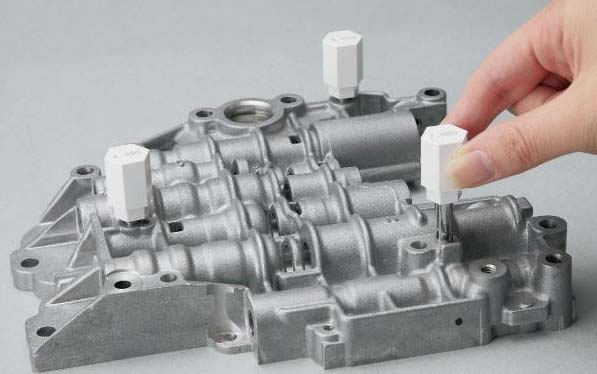
Every part has predefined inspection checkpoints. These may include threaded holes, dimensional features, slots, grooves, or critical surfaces. Intelgic’s AI monitors the inspection activity at each checkpoint and records its completion.
For example, if a metal component has 15 holes requiring gauge inspection, AI can track which holes have been inspected and identify any missing checkpoints.
Illustrative: 13 of 15 holes verified. Holes H7 and H12 are flagged as missing checkpoints.
Helps prevent incomplete inspections and reduces the risk of defective parts passing quality control.
Gauge Selection and Usage Verification
Different checkpoints often require different types or sizes of gauges. AI identifies the gauge being used and verifies whether it is applied to the correct inspection location. The system can monitor:
For actual dimensional values, Intelgic can combine camera-based monitoring with compatible digital gauges or measurement instruments.
Reduces inspection errors caused by incorrect gauge selection or missed gauge operations.
Part Rotation and Orientation Monitoring
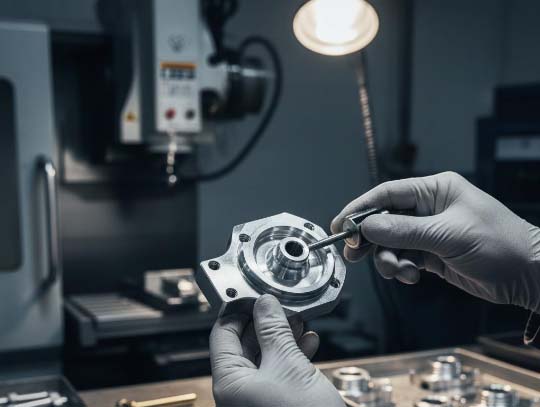
Complex parts often require inspection from multiple sides and angles. An operator may need to rotate a component 90°, 180°, or reposition it several times to access different features.
Intelgic’s AI tracks part orientation, rotation, and movement to determine whether the required surfaces have been presented for inspection. If an operator skips a mandatory rotation or fails to inspect a required side, the system can generate an alert.
Improves inspection coverage for complex, multi-surface components.
Handling, Sequence, and Real-Time Guidance
Correct Part Handling and Placement
How an operator handles a part can be just as important as the inspection itself. Incorrect placement, movement, or stacking can affect inspection accuracy or damage sensitive components. Intelgic’s AI can verify whether an operator:
Improves handling consistency and reduces accidental damage or part mix-ups.
Inspection Sequence and SOP Compliance
Some components require inspections to be performed in a particular order. For example, the operator may need to:
Intelgic’s AI compares the observed sequence against the inspection SOP and detects missed or out-of-order activities.
Standardizes inspection execution across operators, workstations, and production shifts.
Real-Time Alerts and Operator Guidance
Detecting a missed checkpoint after a part has moved to the next station may be too late. Intelgic’s solution can identify deviations during inspection and guide the operator to complete the missing operation.
For example, if the operator attempts to finish the inspection without checking hole H8, the system can display:
Example interface for illustration; not an actual product screenshot.
The operator can correct the omission immediately instead of discovering the problem during downstream inspection.
Enables faster corrective action and reduces dependence on continuous manual supervision.
Digital Proof of Manual Inspection: Beyond Paper Checklists
Traditional inspection records usually indicate whether a part passed or failed. Intelgic adds another dimension: evidence that the required inspection procedure was followed.
For each part, the system can generate a digital inspection record containing:
These records support quality audits, traceability, process improvement, and root-cause analysis.
Innovative Applications Beyond Checkpoint Monitoring
AI monitoring creates opportunities to improve manual inspection beyond basic step verification.
A digital model of the part can highlight verified checkpoints and show operators which locations still require inspection.
AI can identify checkpoints taking unusually long, repeated part movements, and inefficient inspection sequences.
AI can compare the part being inspected with the expected product variant before activating the corresponding SOP.
Cameras can verify whether inspected parts are placed in the appropriate pass/fail bins.
New inspectors can receive context-aware instructions and immediate feedback when they miss a checkpoint or perform an incorrect action.
These features can help transform manual inspection stations into intelligent, data-driven quality assurance workstations.
Which Industries Benefit from AI Manual Inspection Monitoring?
What Are the Benefits of AI-Based Manual Inspection Monitoring?
The objective is not to replace skilled quality inspectors. It is to equip them with a system that helps prevent missed operations and ensures consistent inspection execution.
Key benefits include:
Manufacturers can also use the collected process data to:
Camera-based verification confirms observable inspection actions, not necessarily the accuracy of a gauge reading. Measurement accuracy must be established through suitable instruments, calibration, and measurement system validation.
Why Choose Intelgic for AI-Powered Manual Inspection Monitoring?
Intelgic develops AI-powered machine vision and manufacturing process assurance solutions to improve quality, efficiency, and operational visibility. Our inspection monitoring solution can combine:
The system is configurable for different:
It can integrate with manufacturing execution systems and quality management applications to associate inspection evidence with individual parts and production orders.
With Intelgic, manufacturers can introduce intelligent process assurance while continuing to use their existing manual inspection expertise and equipment.
Don’t Just Inspect the Part. Verify the Inspection.
Manual inspection is an important quality control operation, but even the best inspectors can occasionally miss a checkpoint, use the wrong gauge, or handle a component incorrectly.
Intelgic’s AI-powered camera-based inspection monitoring adds a layer of intelligent verification to manual inspection activities. By tracking inspection checkpoints, gauge interactions, part rotation, handling, and SOP compliance, manufacturers can improve inspection consistency and build stronger digital evidence of the quality control process.
Frequently Asked Questions
What is AI-powered manual inspection monitoring? +
It is a camera-based computer vision solution that observes manual inspection activities and verifies checkpoint completion, gauge usage, part handling, and inspection SOP compliance.
Can AI verify that operators inspect every checkpoint? +
Yes. For visually observable operations, AI can track predefined checkpoints and verify whether the required inspection activity occurred at each location. Performance depends on camera visibility and application-specific validation.
Can AI detect incorrect gauge usage? +
Yes. AI can identify gauges and their interactions with parts. It can flag incorrect gauge selection, wrong checkpoint usage, and skipped inspection operations.
Can AI track part rotation and movement? +
Yes. AI can track part orientation, rotation, movement, and placement to verify that required inspection positions are reached.
Can AI verify actual gauge measurements? +
Camera-based monitoring can verify visible inspection activity. To capture actual dimensional measurements reliably, the system can integrate with digital gauges and other measurement devices.
Does the system replace manual quality inspectors? +
No. The solution supports inspectors by monitoring inspection procedures, identifying omissions, and providing real-time feedback.
Can the system work with existing inspection stations? +
Yes. It can often be installed around existing workstations with appropriately positioned cameras and lighting, subject to a feasibility assessment.
Can AI generate part-wise inspection compliance reports? +
Yes. The system can associate verified checkpoints, process deviations, timestamps, and supporting inspection evidence with a part ID or serial number.
Can one AI system support different parts and inspection SOPs? +
Yes. Configurable inspection recipes can accommodate different parts, checkpoint locations, gauge requirements, and inspection sequences.
How can a manufacturer get started with AI manual inspection monitoring? +
A typical implementation begins by reviewing the parts, inspection SOP, gauges, workstation layout, and critical checkpoints. Intelgic can then assess camera placement and validate activity recognition through an application-specific pilot.